How to Keep Takeaway Fish and Chips Crispy on the Way Home
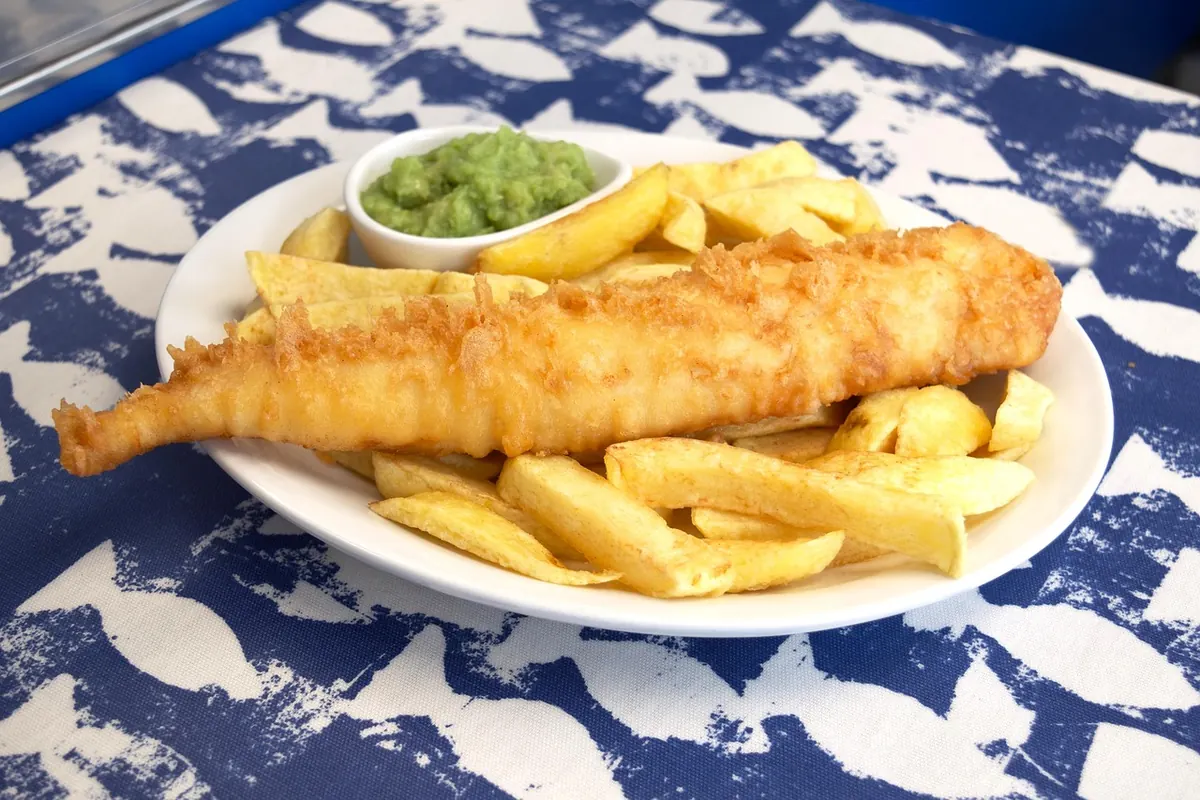
Fish and chips eaten from the paper on a sea wall, with the wind trying to steal your chips, is one thing. Fish and chips that have spent fifteen minutes in a sealed bag on the passenger seat is another. The batter that left the fryer in shards arrives soft and clammy, and the chips have steamed themselves pale and limp. None of that is the fryer's fault. It is the journey. A few decisions at the counter and on the way home will get you most of the way back to crisp.
Why steam, not distance, does the damage
Anything hot out of a fryer is still throwing off water vapour. Inside a sealed bag or a closed box, that vapour has nowhere to go. It hits the cool inner surface of the packaging, condenses, and drips straight back onto the batter and the chips.
At the same time the chips keep losing water from the inside out, and any salt already applied pulls more of it to the surface. Starch plus water equals soft. The crust that was brittle when it left the counter becomes leathery, and no amount of oven time at home will fully reverse it. Shortening the journey helps. Keeping the steam moving helps more.
Order it so it travels well
Most of the work happens before you pay. These are all reasonable requests, and most shops will happily oblige if you ask while they are wrapping, not after.
- Ask for the fish and the chips wrapped separately, even if they go into the same bag.
- Ask for salt and vinegar on the side, or leave both until you are home.
- Keep curry sauce, gravy and mushy peas in their own tubs, standing upright.
- Ask for paper rather than a sealed plastic carrier if you have the choice.
- Skip the second bag. Double-bagging traps a layer of steam you cannot vent.
Salt and vinegar are the two things people blame the fryer for, and both are usually added too early. Salt draws moisture out of the chips within minutes; vinegar adds liquid on top of that. Sprinkling both at the table, over chips that are already spread out and breathing, makes a noticeable difference to the texture — and you get a sharper hit of vinegar, too.
Packaging: what good looks like
Plain paper wrap is the traditional choice and still one of the best, because paper breathes. Cardboard boxes with vents work well for the same reason. Polystyrene trays and lidded boxes trap heat beautifully, which sounds ideal until you remember that trapped heat means trapped moisture. Thin plastic clamshells are the worst of the lot: sealed, non-porous, and prone to collecting condensation on the lid that then rains back down.
If it is already boxed
You cannot always choose. When the food arrives in a closed container, crack the lid open a finger's width before you leave, or rest the lid slightly askew rather than pressed shut. If the chips are in a paper bag inside a plastic carrier, take the paper bag out and carry it on its own, or leave the carrier open at the top. Small adjustments, but they give the steam somewhere to go.
Vent it, don't unwrap it
There is a middle ground between sealing everything shut and holding a loose pile of chips in the wind. Think of the bag as a chimney. Roll the top open a couple of inches, keep the bag upright, and let the hot air rise and carry the vapour out with it. The food stays warm because the heat is still rising through it; the steam leaves instead of settling.
What you should not do is wrap a tea towel or a jumper over the top of the bag. That is a lid, and you are back where you started. If you want insulation, wrap the sides and base and leave the opening clear. On a cold, windy walk, keep the opening small and turned away from the wind — you need ventilation, not exposure.
The journey home
How you carry it matters almost as much as how it is wrapped. A bag that tips on its side pools oil and steam against one surface, and everything inside slumps into it.
- Carry it from the base with both hands and keep it level. Hooking a finger through the handle and letting it swing is a guaranteed slump.
- In the car, put it on the front passenger seat or in the footwell, wedged with a bag or a coat so it cannot slide. A seatbelt works well if you are on your own.
- Keep it away from heater vents, and keep it out of the boot. The boot is colder, it rattles, and it will scent your shopping for a week.
- Avoid the lap-under-a-coat trick on a long drive. It feels warm and cosy; it is also a sealed, humid pocket.
- Walk the shortest route rather than the scenic one. Ten minutes matters here.
If you are on foot, keep the bag flat and steady at your side rather than swinging it. If you are cycling or on a bus, a rigid box inside a rucksack, upright and packed snugly, beats a carrier bag hanging off the handlebars every time.
The first two minutes in your kitchen
Unwrap as soon as you are through the door. Lift the fish onto a wire rack so air reaches the underside, and spread the chips in a single layer on a plate or tray rather than leaving them heaped. A light blot with kitchen paper lifts surface oil and any condensation that has already formed; press gently rather than scrubbing at the batter.
Then give it a short, hot blast. A few minutes on a rack in a hot oven, or two or three minutes in an air fryer, will drive off surface moisture and bring some crunch back to the batter. Keep the time short — you are drying the outside, not cooking the food again.
What not to do
- Do not use a microwave. It heats from the inside, turns the batter rubbery and leaves the chips steaming.
- Do not cover the plate with foil or put the food back in the closed box.
- Do not pour curry sauce or gravy over the whole portion if you plan to reheat any of it.
Add salt and vinegar now, at the table, once the food is spread out. And keep an eye on the clock: this is food at its best within ten minutes of leaving the fryer. Anything left out for a couple of hours is not worth rescuing.
A short checklist before you leave the counter
- Fish and chips wrapped separately.
- Salt and vinegar on the side.
- Sauces in their own tubs, upright.
- Paper bag, top rolled open.
- Held from the base, level, straight home.
Get those five right and the difference is immediate: batter that still cracks under the fork, chips with a bit of bite, and no sad puddle at the bottom of the bag. It will not be quite the same as eating them on the pavement outside the shop, but it will be close enough to matter.
Photo: Macourt Media / Pexels