How to Make Crispy Beer-Battered Fish and Chips at Home
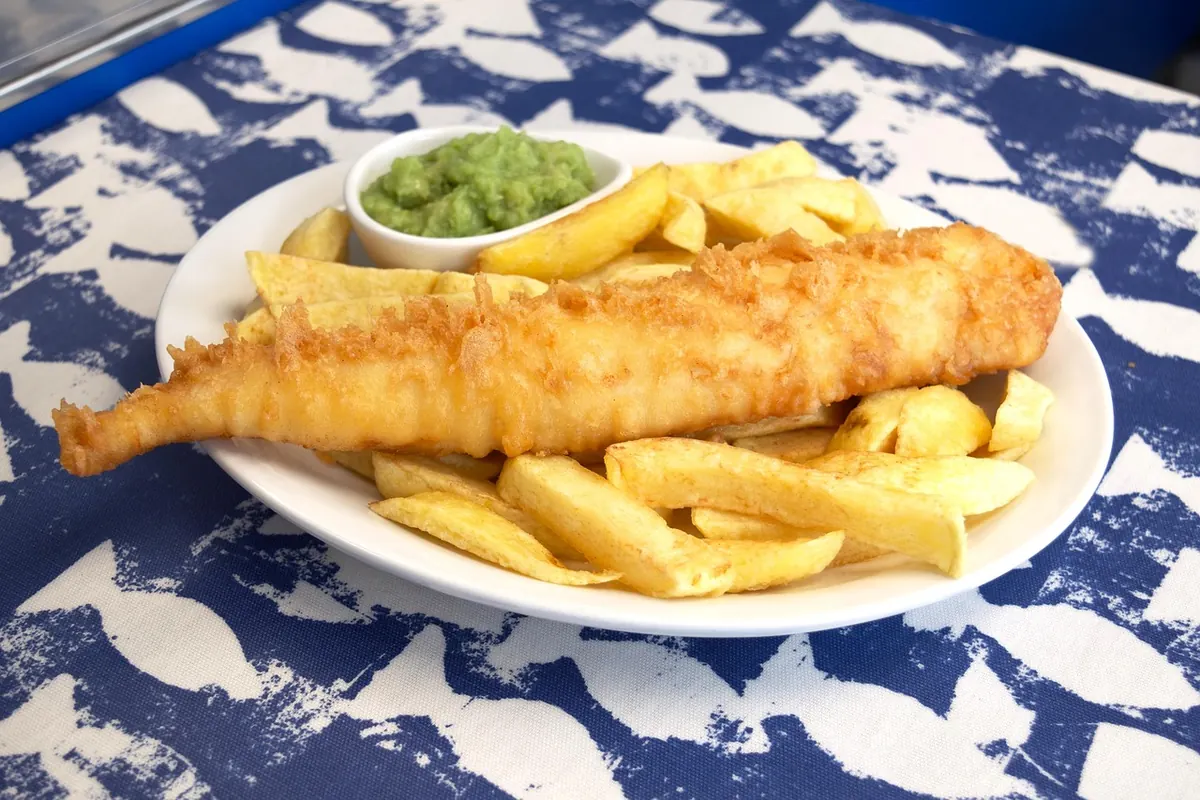
Fish and chips looks like it belongs to a shop with a fryer the size of a bathtub and a queue out the door. It doesn't. A heavy pot, a thermometer, and about an hour of attention will get you a batter that shatters when you bite it and chips that are crisp at the edges and fluffy in the middle. Two things separate good home fish and chips from soggy disappointment: cold batter and hot oil. Both are easy to control once you know what you're aiming for.
What trips most people up isn't skill. It's timing. The chips need a long, gentle first fry and a fast, furious second one. The fish needs thirty seconds of contact with the batter and four minutes in the oil. If you try to cook both at the same moment, the oil temperature drops, the fish goes pale, and everything lands on the plate lukewarm. Read the whole method once before you start, then work backwards from the moment you want to eat.
What You Need Before You Start
This feeds four. Get everything on the counter first, because once the oil is hot you won't want to be hunting for the flour.
The Equipment
- A deep, heavy pot — a 4 to 5 litre cast iron or stainless steel saucepan holds heat far better than a thin one. Fill it no more than one third full of oil.
- A clip-on or instant-read thermometer. This is not optional. Guesswork is how you end up with a greasy crust and raw fish.
- A wire rack set over a tray, for draining. Paper towels steam the crust and undo everything you just did.
- Tongs, a slotted spoon, and a spider if you have one.
- A wide bowl for the batter and a whisk. A fork works, but a whisk gets you to the right texture in half the time.
The Ingredients
- Fish: four thick fillets, roughly 150–180 g each. Cod and haddock are the classics; pollock, hake, or halibut all work. Look for fillets at least 2 cm thick at the spine, because thin tails overcook before the batter browns.
- Flour: 200 g plain flour, plus 2 tablespoons of cornflour for crispness and a little extra for dusting the fish.
- Leavening: 1 teaspoon baking powder. The carbonation in the beer does most of the work, but a little baking powder backstops it.
- Beer: 330 ml of something cold, cheap, and fizzy — a standard lager is ideal. Avoid stouts and heavily hopped IPAs; they burn bitter. Sparkling water works if you want to skip the alcohol.
- Potatoes: 1.2 kg of floury, high-starch potatoes — Maris Piper, King Edward, Russet, or Desiree. Waxy potatoes make sad, glassy chips.
- Oil: 2 litres of a neutral, high-smoke-point oil. Rapeseed (canola), sunflower, or groundnut are all good. Beef dripping is the traditional choice if you want to go all the way.
- To finish: flaky sea salt, malt vinegar, lemon wedges.
Buy the fish the day you cook it, and ask for it cut thick. A fishmonger will usually give you the middle cuts from the loin if you ask — those are the pieces that hold up best to frying.
Cold Batter, Hot Oil: The Two Rules That Matter
The batter is a fragile shell of gluten surrounding bubbles of carbon dioxide. Those bubbles expand violently the instant they hit hot oil, and that expansion is what makes the crust crisp. Anything that dissolves those bubbles before frying — warmth, time, aggressive whisking — works against you.
Why Cold Batter Works
Cold batter does three things. First, it keeps the carbon dioxide dissolved in the beer, so more bubbles form in the hot oil. Second, cold batter on cold fish creates a sharp temperature difference when it enters the oil, which sets the crust fast and stops the batter from sliding off. Third, cold batter means less gluten development, so the coating stays tender and brittle rather than turning into a chewy jacket.
Keep the bowl of batter sitting in a larger bowl of iced water while you work if your kitchen is warm. It sounds fussy. It takes ten seconds and it makes a visible difference.
Why Oil Temperature Matters More Than Any Recipe
Fish should fry at 180–190°C (355–375°F). Below 170°C, the batter soaks up oil before it sets and you get a greasy, pale coat. Above 200°C, the outside darkens before the fish cooks through, and the oil starts to break down and smoke.
Here's the part home cooks forget: dropping food into oil drops the temperature, sometimes by 20°C. So heat the oil to 190°C before the fish goes in, knowing it will settle at roughly 175–180°C. Fry in batches of two fillets. Crowding is the single most common reason home fish and chips fails.
Making the Batter
- Whisk 200 g plain flour, 2 tablespoons cornflour, 1 teaspoon baking powder, and a good pinch of salt in a wide bowl.
- Pour in the cold beer all at once and whisk briefly — five or six strokes. Stop while there are still small lumps. A smooth batter is an overworked batter, and an overworked batter fries tough.
- Check the consistency. It should flow like double cream and coat the back of a spoon, leaving a thin film. Too thick, add a splash more beer. Too thin, a spoonful of flour.
- Set the bowl in iced water and leave it alone until the moment you fry.
Do not rest the batter for half an hour, however tempting it is. Every minute it sits, bubbles escape and the coating loses lift. Mix it after the chips have had their first fry, and use it within fifteen minutes.
Frying the Fish
- Pat the fillets bone dry with kitchen paper, then season them lightly on both sides.
- Dust each fillet in plain flour and shake off the excess. This dry layer gives the wet batter something to grip.
- Hold a fillet by the tail, dip it into the batter, and let the excess drip back into the bowl for two seconds. You want a coat, not a blanket.
- Lower it into the oil away from you, tail end first, and release it gently. It should sink, then rise and start bubbling immediately.
- Fry for 4–6 minutes, turning once, until deep golden and rigid. The internal temperature should reach 60°C (140°F) for cod.
- Lift out with a spider or slotted spoon and drain on the wire rack — never on paper. Salt immediately.
The Chips
Good chips are cooked twice, and the first fry is the one people skip. That first, cooler fry cooks the inside; the second, hotter fry crisps the outside.
- Peel the potatoes and cut them into 1.5 cm batons. Keep them roughly even — uneven chips cook unevenly.
- Rinse in cold water until it runs clear, then soak for 20 minutes to wash off surface starch.
- Drain and dry them thoroughly. Wet potatoes spit violently in hot oil.
- First fry: 130–140°C for 7–8 minutes, until pale, floppy, and just cooked through. They should not colour. Lift out and drain; let them cool for at least 15 minutes, or up to several hours if you're planning ahead.
- Second fry: 190°C for 2–3 minutes, until golden and crisp. Drain, salt hard, and serve within two minutes.
Parboiling Instead of a First Fry
If you'd rather not stand over the pot twice, simmer the cut chips in salted water for 5–6 minutes until just tender but not falling apart, then drain and leave them to dry on a rack until completely cool. A quick blast at 190°C finishes them. It's slightly less crisp than a true double fry, but it's faster and uses less oil.
Troubleshooting: What Went Wrong
- The batter slid off. The fish was wet, or it wasn't dusted with flour, or the oil was too cool when it went in.
- The crust is greasy and pale. The oil was below 170°C, or you crowded the pot. Fry fewer pieces and let the oil recover between batches.
- The chips are soggy. Not enough starch washed off, potatoes too wet, or the second fry was too short. Give them another 90 seconds at 190°C.
- The fish is dry inside. The fillets were too thin. Ask for thicker cuts next time.
- Everything tastes of oil. The oil has been used too many times or overheated. Strain it through a fine sieve after each session and replace it after three or four uses.
Serving, Sides, and Keeping It Crisp
The traditional finish is salt, then malt vinegar — in that order, and only after frying. Salt draws moisture to the surface, so anything salted before it hits the oil will steam itself soft. Vinegar goes on the chips, not the fish, or the batter you worked so hard for will go limp in seconds.
Serve with any of these:
- Tartare sauce — mayonnaise, capers, gherkins, lemon juice, and a little chopped parsley.
- Mushy peas — simmer frozen peas with butter, a pinch of sugar, and mint, then crush roughly.
- Lemon wedges and extra flaky salt at the table.
- Curry sauce, if you're from the north of England and know what's good for you.
Timing is the last thing to get right. Parboil or first-fry the chips early. Heat the oil. Make the batter last. Fry the chips at 190°C, drain them, then fry the fish while the chips sit on their rack in a low oven — they'll hold crisp for five minutes without complaint. Everything lands on the plate at once, and nothing waits long enough to go soft.
Do it once properly and the fish shop stops being a place you go. It becomes a thing you make on a Friday, with a cold beer left over in the bottle.
Photo: Cristian Jacinto / Pexels